

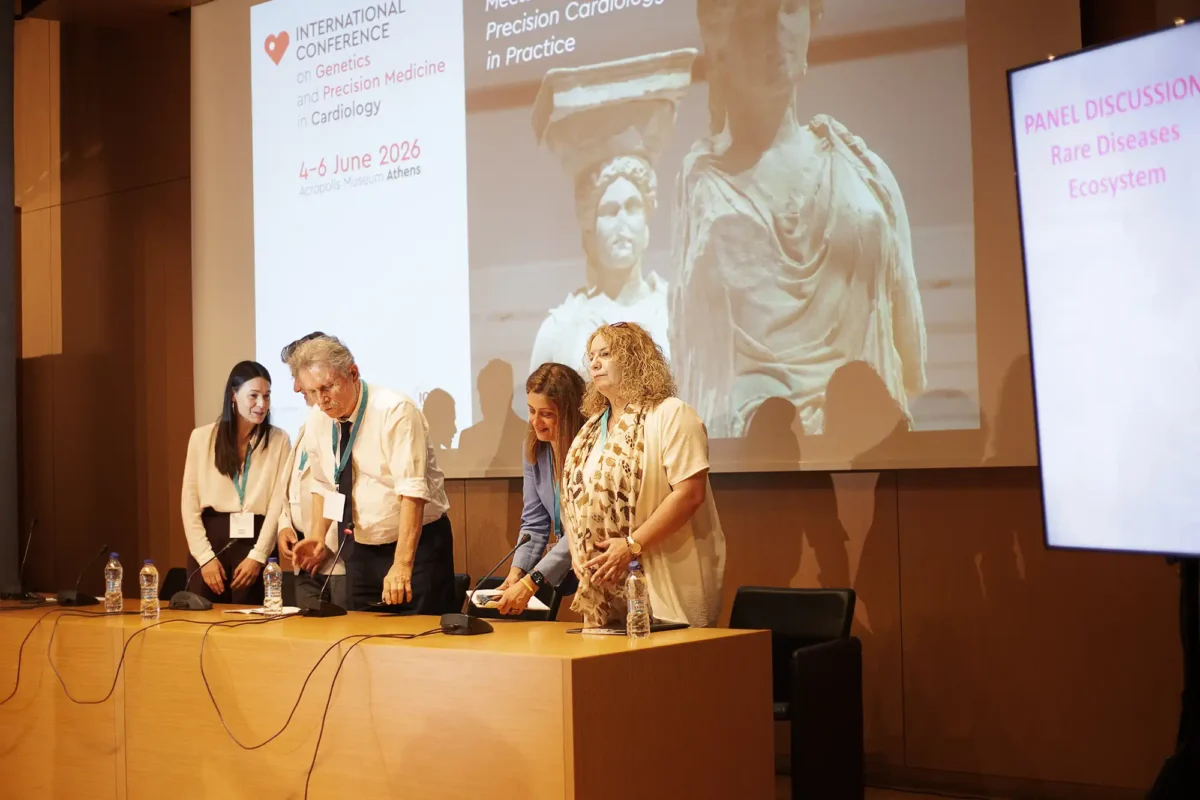
International Conference on Genetics and Precision Medicine in Cardiology 2026
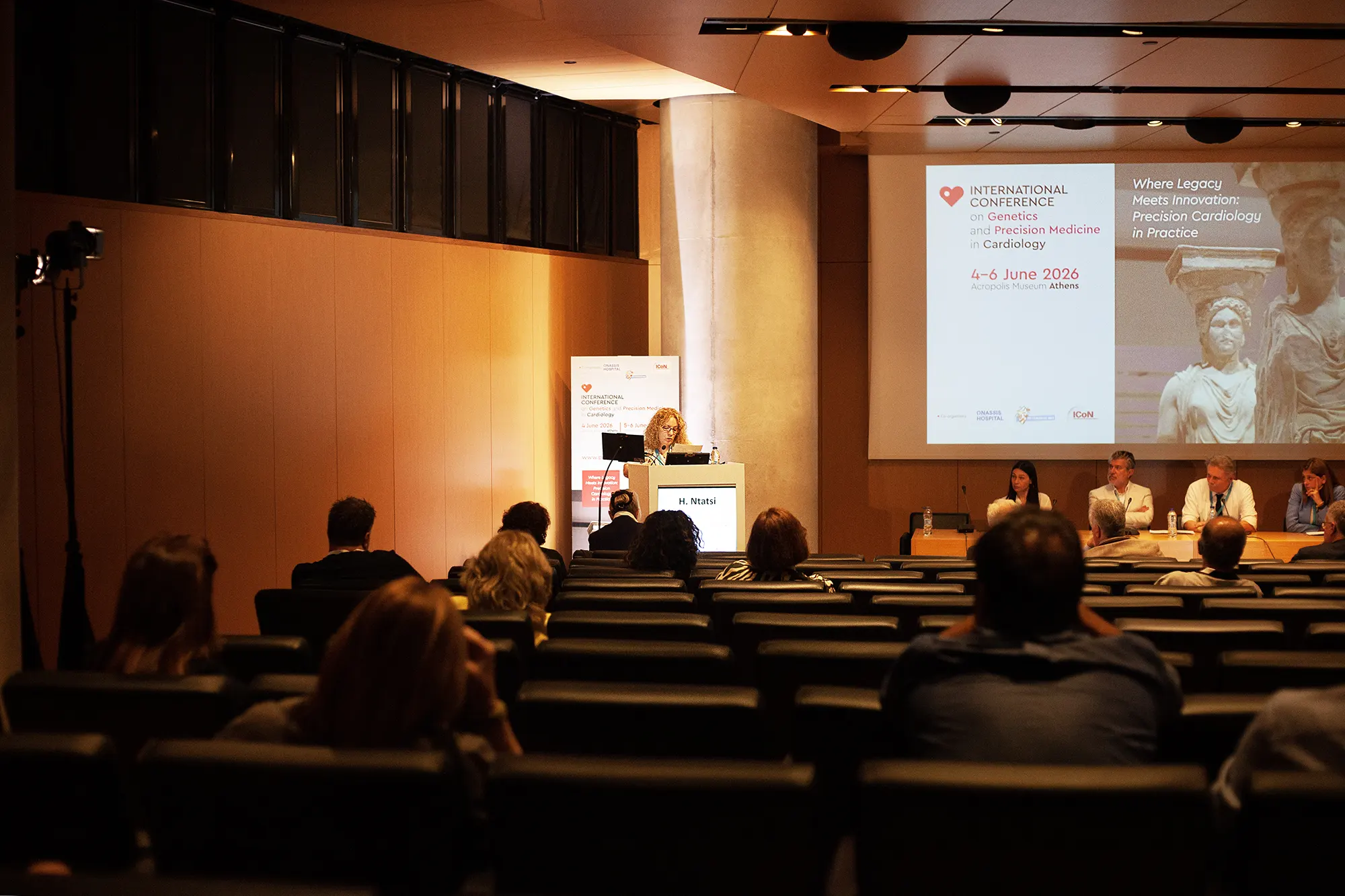
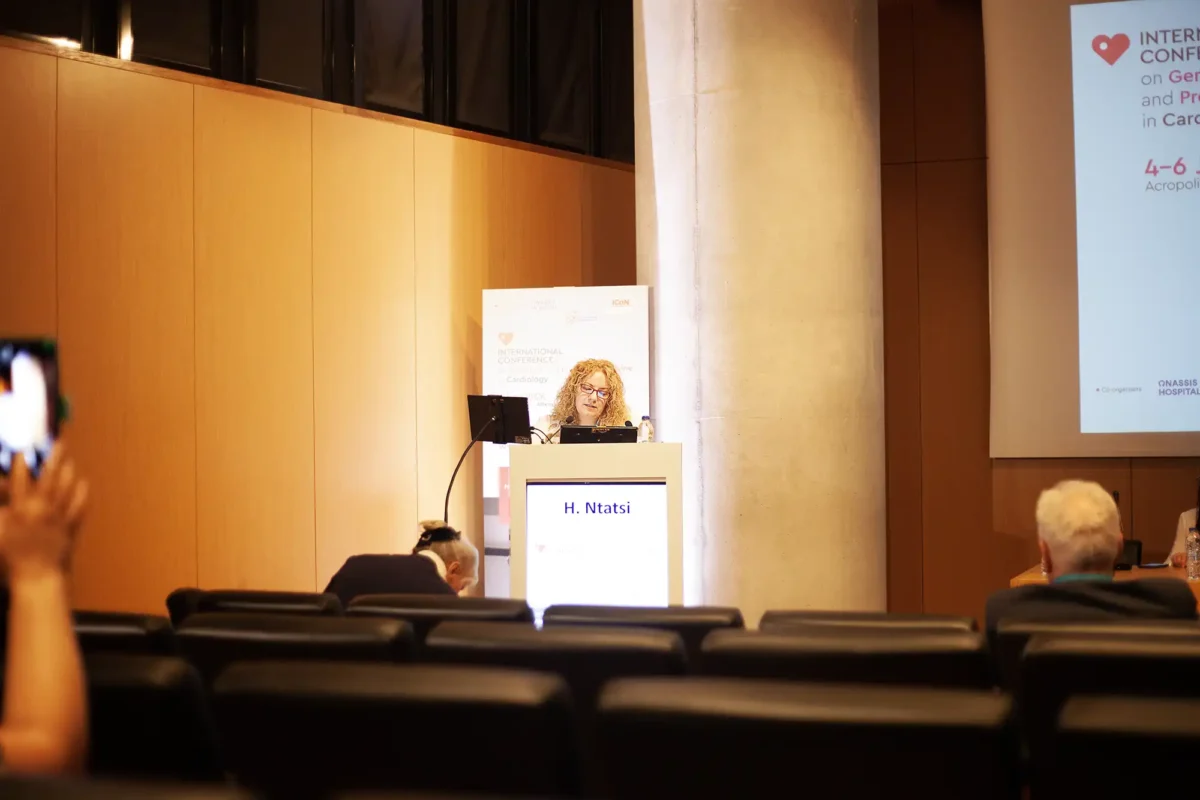
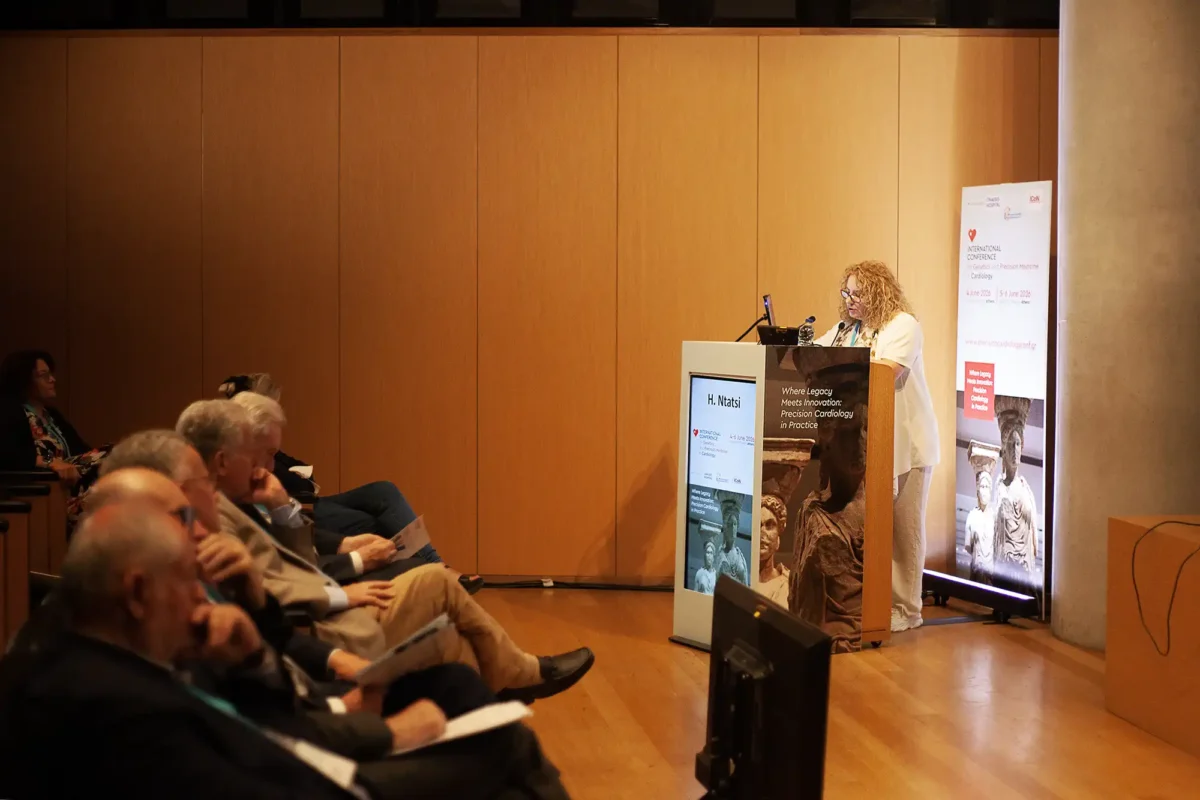
On June 6, 2026, at the Acropolis Museum, Chara Datsi — a clinical psychologist and founding member of the NATH Organization — took the stage at the International Conference on Genetics and Precision Medicine in Cardiology. She participated as a speaker on the panel “Rare Diseases Ecosystem”, alongside leading scientists such as Dr. Aris Anastasakis, Eloisa Arbustini, and Perry Elliott.
However, she did not speak solely as a scientist. She spoke, as she herself said, as a mother who had buried her child.
"I said good night to my 17-year-old son and found him dead the next morning."
Chara Datsi publicly shared her personal tragedy. On July 5, 2024, her son Kostis — a perfectly healthy 17-year-old athlete, full of dreams for the summer and the life ahead of him — died in his sleep from Sudden Youth Death Syndrome.
The most shocking detail of her testimony: Kostis, as an athlete, underwent mandatory cardiac checkups three times a year starting at age 7. Over the course of a decade, he had undergone approximately 25 electrocardiograms, echocardiograms, and blood tests. No cardiologist ever mentioned the possibility of sudden youth death. No one took a detailed family history. No one warned her.
"I don't know if it would have changed the outcome. But what I do know is that knowledge is power—and ignorance costs lives."
The struggle with a system that leaves parents on their own
Her speech did not stop at the loss itself. She described with raw honesty the systemic gaps she encountered as a grieving parent in Greece:
- The forensic report arrived six months after her son's death — and provided no answers.
- There is no coordinated procedure between the medical examiner’s offices and the hospitals. She was forced herself to transport her child’s blood sample from the morgue to the hospital, inside an envelope on the passenger seat of her car, terrified that the sample might be compromised.
- She found substantial support not from the Greek system, but from the SUDC Foundation in the U.S., which provided her with scientific guidelines, psychological support, and grief support groups.
As he pointed out, the Onassis Precision Medicine Program in Cardiology operates to high scientific standards and is completely free of charge—thanks mainly to the dedication of Dr. Anastasakis—but lacks funding: it conducts clinical and genetic testing on 3,000 people with just one part-time secretary.
The demand: genetic testing for everyone, through EOPYY
Chara Datsi’s main message to the Ministry of Health was clear: genetic testing for hereditary heart diseases must be included in and covered by EOPYY for the general population.
She cited two international studies to support her claim:
- Research by Dr. Julie Cerel (University of Kentucky): following a sudden death, up to 135 people—relatives, friends, and colleagues—are negatively affected.
- A 2018 Swedish study: mothers who suddenly lose a child face a 31% higher risk of mortality in the first four years following the loss.
“You’re not putting a strain on the budget. You’re investing in prevention. You’re eliminating sudden youth death syndrome from tomorrow’s society.”
Why was natha.gr created?
This experience led to the creation of the organization and the website natha.gr. As Chara Datsi explained, the goal was for every parent to find the process mapped out step by step, in simple terms—because “a grieving parent cannot act like a detective.”
Her speech concluded with a dedication: in memory of her son Kostis and all the children “who were frozen in time.”
At natha.gr, we continue this effort to provide information and support so that no family is left to face the sudden death of a young person alone.

The entire International Conference on Genetics and Precision Medicine in Cardiology 2026
FAQ
Είναι ο ξαφνικός, απρόσμενος θάνατος ενός νέου ανθρώπου, συχνά στον ύπνο, χωρίς προηγούμενα συμπτώματα. Τα περισσότερα υπεύθυνα νοσήματα είναι κληρονομικά και δεν έχουν προειδοποιητική φάση — η πρώτη εκδήλωση μπορεί να είναι ο ίδιος ο θάνατος.
Σύμφωνα με έρευνα της Ελληνικής Καρδιολογικής Εταιρείας (2019), περίπου 300 άνθρωποι κάτω των 40 ετών ετησίως. Οι ειδικοί εκτιμούν ότι ο πραγματικός αριθμός είναι μεγαλύτερος λόγω υποδιάγνωσης.
Σε πολλές περιπτώσεις, ναι. Ο γενετικός έλεγχος για κληρονομικές καρδιοπάθειες μπορεί να εντοπίσει συγγενείς που βρίσκονται σε άμεσο κίνδυνο, επιτρέποντας έγκαιρη παρέμβαση πριν είναι αργά.
Το Πρόγραμμα Ιατρικής Ακριβείας στην Καρδιολογία του Ωνασείου προσφέρει δωρεάν κλινικό και γενετικό έλεγχο. Περισσότερες πληροφορίες και τα κέντρα αναφοράς θα βρείτε στο natha.gr.
Στο natha.gr υπάρχει αναλυτικός οδηγός βήμα προς βήμα για ιατροδικαστική έκθεση, γενετικό έλεγχο και ψυχολογική στήριξη. Δεν χρειάζεται να αντιμετωπίσετε το σύστημα μόνοι σας.